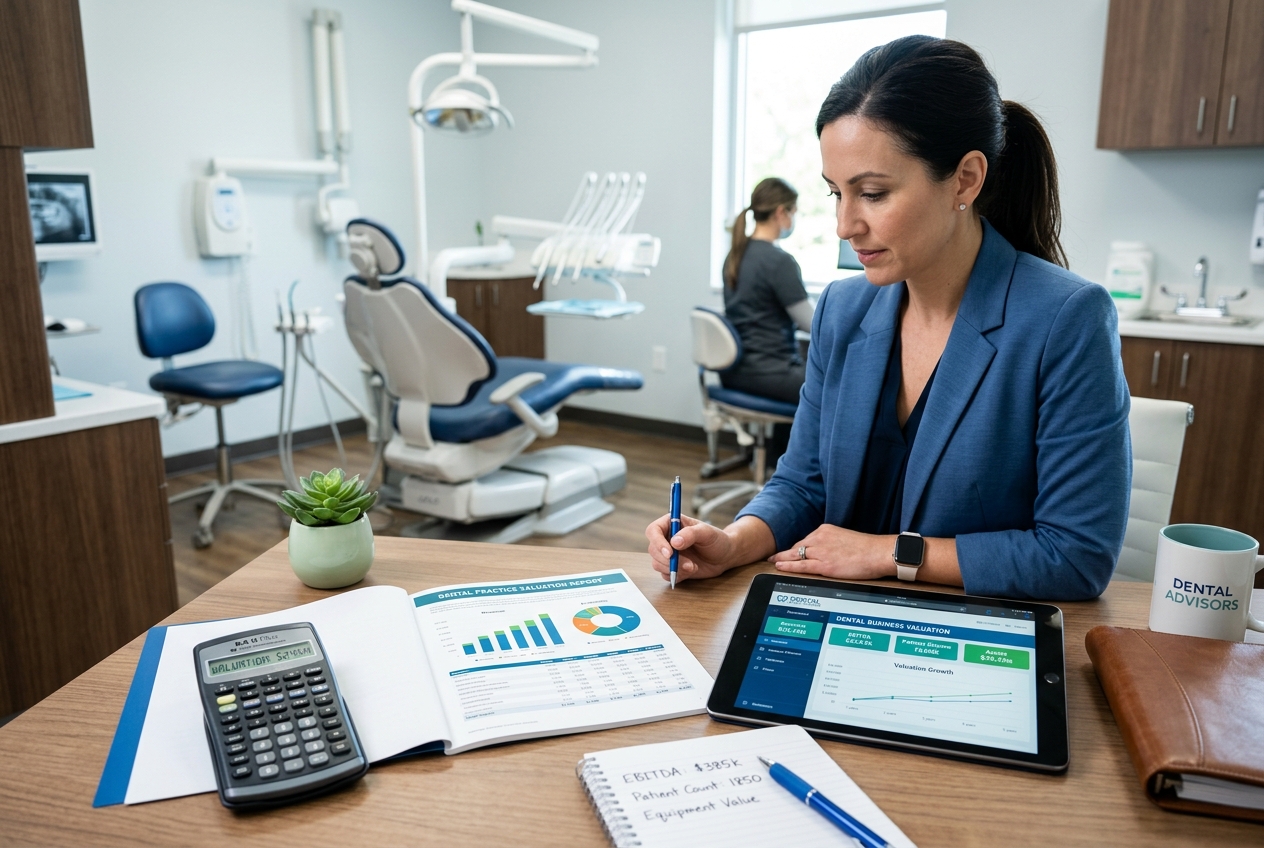
Whether you are thinking about selling, planning for retirement, or just curious about your biggest asset, understanding how dental practices are valued helps you make better decisions. The short answer is that Australian practices typically sell for 60-100% of annual revenue. The longer answer is more nuanced.
Two main valuation methods
Percentage of revenue is the most common approach in Australia. A practice billing $1 million might sell for $600,000 to $1 million depending on its characteristics. This method is simple and widely understood, which is why it dominates the market.
Where your practice falls in that range depends on profitability, location, equipment condition, lease terms, and how dependent the practice is on the selling dentist. A highly profitable practice in a growth suburb with modern equipment might command 90-100%. One with ageing equipment, a short lease, and declining revenue might struggle to reach 60%.
Multiple of EBITDA is more sophisticated. EBITDA—earnings before interest, tax, depreciation, and amortisation—gets "normalised" to remove owner-specific expenses and add back a market-rate owner salary. Practices typically sell for 2-4 times this normalised figure.
Corporate buyers often use EBITDA multiples because it focuses on actual profitability rather than just revenue. For a well-run, profitable practice, this method can yield higher valuations.
Quick estimate guide
| Annual Revenue | Typical Range | Premium Practice |
|---|---|---|
| $500,000 | $300K – $400K | $450K – $500K |
| $1,000,000 | $600K – $800K | $900K – $1M |
| $1,500,000 | $900K – $1.2M | $1.35M – $1.5M |
| $2,000,000+ | $1.2M – $1.6M | $1.8M – $2M+ |
These are indicative ranges only. Actual valuations depend heavily on specific circumstances.
What increases value
Location matters more than many sellers expect. A practice in a high-growth suburb or underserviced regional centre can command a significant premium over an identical practice in an oversupplied area.
Patient loyalty and recall rates signal sustainable revenue. A practice where patients return regularly and accept treatment recommendations is worth more than one with constant patient churn.
Modern equipment—particularly chairs, imaging, and sterilisation—reduces the buyer's capital expenditure needs. Equipment less than five years old adds value; equipment needing imminent replacement detracts.
A long lease with options gives buyers security. If the lease has only two years remaining, buyers face uncertain costs and potential forced relocation—this significantly reduces value.
Multiple dentists reduce owner dependency. If the selling principal does 80% of production, buyers worry patients will leave when they do. Practices with established associates command better prices.
Stable, trained staff willing to stay through the transition reduces risk and integration headaches for buyers.
What decreases value
Declining revenue trends raise red flags. Buyers pay for what the practice actually does, not historical peaks or future potential. Consistent growth commands premium pricing; decline requires explanation and discount.
High owner dependency means significant key-person risk. If patients come to see you specifically, some will leave when you do—buyers price this in.
Poor online reputation is increasingly important. New patients Google before booking. Consistently bad reviews limit growth and make buyers nervous.
High staff turnover suggests cultural or management problems that a new owner will inherit.
How to maximise your value
If you are planning to sell in two to five years, start preparing now. Reducing owner dependency is the biggest lever—bring in an associate and gradually transition patient relationships. This takes time but dramatically improves sale prospects.
Update equipment strategically. New chairs and imaging paid for two years before sale contribute to value; buying them six months before sale looks like window dressing.
Secure your lease with renewal options well before you plan to sell. Negotiating from strength beats negotiating from necessity.
Clean up your financials. Remove personal expenses from the business, maintain clear records, and make it easy for buyers to understand what they are actually buying.
Getting a formal valuation
For a formal valuation, engage specialists who understand dental practices: practice sales brokers (who often provide free valuations if you list with them), specialist dental accountants, or business valuers with healthcare experience.
Expect to pay $2,000-$5,000 for an independent formal valuation report. This is worth doing 12-24 months before you plan to sell—it gives you time to address any issues that might reduce your price.
Common questions
What is goodwill?
Goodwill represents intangible value: patient relationships, reputation, location advantage, and established systems. It is typically the largest component of a practice sale price.
Do corporate buyers pay more?
Often yes. Corporates can pay 90-100%+ of revenue because they add value through economies of scale, centralised marketing, and management systems. But they are also more demanding in due diligence.
What records do I need?
Three years of financials (P&L, tax returns), patient numbers and active rate, production by provider, lease agreement, equipment list with ages, and staff details.